U.S. Stock Market Outlook 2025: Will Tech Stocks Keep Driving Wall Street?
As 2025 unfolds, Wall Street stands at a crossroads. After a rollercoaster 2024 filled with inflation worries, interest rate hikes, and tech stock dominance, investors are asking one key question:
“Can the U.S. stock market continue its rally, or is a correction inevitable?”
The U.S. economy remains resilient, unemployment is low, and inflation is finally easing — yet volatility persists. The Nasdaq Composite and S&P 500 both closed 2024 with double-digit gains, largely powered by AI-driven companies like NVIDIA, Microsoft, and Alphabet.
But as analysts project slower growth and possible Fed policy shifts, 2025 could redefine investment strategies for traders, institutions, and long-term investors alike.
1. 2024 Recap: The Tech-Driven Market Surge

To understand what’s ahead, we must look back.
In 2024, tech stocks dominated Wall Street once again, accounting for nearly 60% of total S&P 500 gains.
Key highlights:
-
NVIDIA’s market cap surpassed $3 trillion amid the AI boom.
-
Microsoft and Apple solidified their trillion-dollar empires.
-
Tesla and Amazon rebounded as consumer confidence improved.
-
The Federal Reserve paused rate hikes, boosting investor optimism.
The “Magnificent Seven” — Apple, Microsoft, Google, Amazon, Tesla, NVIDIA, and Meta — became symbols of market concentration and innovation power.
💬 According to Bloomberg Intelligence, the top 10 companies now represent over 33% of the S&P 500’s total market value.
This unprecedented dominance raises the question: Can tech stocks continue leading in 2025, or will diversification return to center stage?
2. Federal Reserve Policy: The Deciding Factor
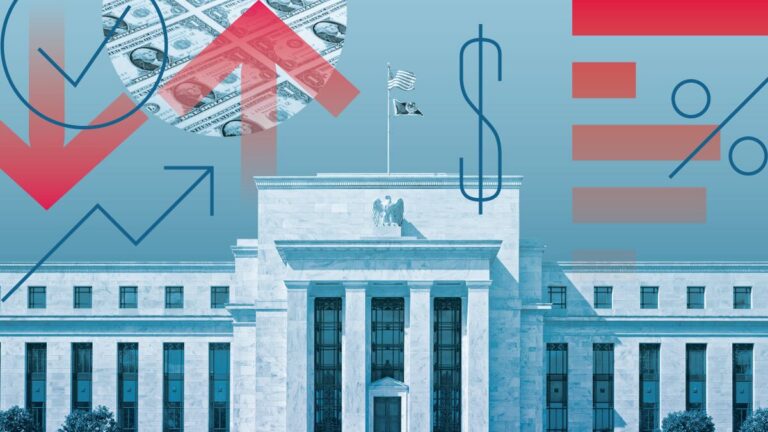
The Federal Reserve’s monetary policy will likely be the most influential factor shaping Wall Street’s trajectory in 2025.
After nearly two years of tight monetary control, the Fed is signaling gradual interest rate cuts — potentially two to three during the year — if inflation continues to cool.
Investor sentiment indicators:
-
The CME FedWatch Tool shows a 65% probability of a rate cut by mid-2025.
-
Bond yields remain steady, suggesting confidence in disinflation.
-
The U.S. Dollar Index (DXY) has slightly weakened, supporting export-oriented firms.
Lower rates would likely boost growth stocks and tech valuations, as borrowing costs decrease and future earnings look more attractive.
However, if inflation reaccelerates due to global energy shocks or geopolitical tensions, the Fed could tighten again — sending shockwaves through equities.
3. The AI Revolution: Catalyst or Bubble?
Artificial intelligence continues to reshape entire industries, from finance to healthcare.
The AI impact in numbers (2024–2025):
-
Global AI investments exceeded $600 billion.
-
Over 30% of S&P 500 companies announced AI integration strategies.
-
Productivity growth in tech-led sectors jumped by 8%.
NVIDIA, the undisputed AI hardware leader, remains central to this revolution, but new players like AMD, Palantir, and Supermicro are capturing investor attention.
⚡ Analysts warn, however, that the AI sector could face short-term volatility as earnings expectations rise faster than profits.
Despite potential corrections, AI remains the single largest growth driver of the 2025 U.S. stock market — comparable to the dot-com surge of the early 2000s, but with stronger fundamentals.
4. Sectors to Watch Beyond Technology

While Big Tech dominates headlines, diversification will be key to sustainable portfolio growth.
Four sectors positioned for strength in 2025:
-
Healthcare: Aging demographics and biotech innovation boost firms like Pfizer, Eli Lilly, and UnitedHealth.
-
Energy Transition: Clean energy, EV infrastructure, and nuclear innovation gain federal support.
-
Financials: Banks may recover margins as loan demand grows post-rate cuts.
-
Consumer Discretionary: Retail and travel rebound as household income stabilizes.
💡 Pro Tip: Keep an eye on ETFs like XLV (Healthcare Select Sector) and XLE (Energy Select Sector) for diversified exposure.
5. The Global Context: China, Europe, and Emerging Markets
The U.S. remains the engine of global capital markets, but international developments could influence Wall Street’s trajectory.
-
China’s economic slowdown and property sector issues may limit global demand.
-
Europe’s recovery is gaining pace, aided by lower energy prices.
-
Emerging markets like India and Brazil are seeing record inflows as investors seek diversification.
However, geopolitical risks — from trade tensions to conflicts — could reignite market volatility.
In essence, while the U.S. leads innovation, global stability will determine the durability of growth.
6. Stock Valuations: Are We Entering a New Bull Market or a Bubble?
Valuation metrics are flashing mixed signals.
-
The S&P 500’s forward P/E ratio stands near 20x earnings, above the 10-year average of 17x.
-
Tech giants trade at an even higher multiple — often above 30x.
-
However, corporate profits remain solid, and margins are expanding due to automation and AI adoption.
Historically, such valuation levels have preceded both extended rallies and steep corrections.
📈 Key insight: If corporate earnings continue growing at 8–10% annually, current valuations may be justified. But if earnings disappoint, expect a swift pullback.
7. Institutional and Retail Investor Behavior

Institutional investors have been cautiously optimistic since Q4 2024.
Meanwhile, retail participation remains robust — fueled by commission-free trading and platforms like Robinhood and Fidelity.
Recent trends:
-
Increased ETF inflows to tech and AI funds.
-
Options trading hit record highs in 2024.
-
Crypto-linked equities like Coinbase are making a comeback amid Bitcoin ETF approvals.
This democratization of investing increases liquidity — but also volatility. When retail sentiment shifts, short-term corrections become sharper.
8. Economic Growth and Corporate Earnings
The U.S. economy is expected to grow 2.1% in 2025, according to IMF projections, with moderate inflation near 2.3%.
Corporate profits are forecasted to rise 6–8%, driven by:
-
Productivity gains from AI adoption.
-
Improved supply chains.
-
Lower financing costs from rate cuts.
However, consumer spending — the backbone of U.S. GDP — may weaken if real wages stagnate.
🧮 In summary: corporate America looks fundamentally strong, but valuations leave little room for disappointment.
9. Risks That Could Derail the Market
Even as optimism builds, investors must stay vigilant about potential headwinds:
-
Inflation Resurgence: Energy shocks or fiscal stimulus could reignite price pressures.
-
Geopolitical Conflicts: Middle East or Taiwan tensions could disrupt supply chains.
-
Tech Regulation: Antitrust action against Big Tech may affect valuations.
-
Cybersecurity Threats: Rising AI integration brings new digital vulnerabilities.
-
Earnings Disappointments: Overhyped sectors could underdeliver.
10. Investor Strategies for 2025
Smart investors will balance growth and safety in 2025 portfolios.
Recommended allocations:
-
40% U.S. Large-Cap (with AI exposure)
-
20% Defensive Sectors (Healthcare, Utilities)
-
20% International Equities (EM + Developed)
-
10% Bonds / Treasuries
-
10% Alternatives (Crypto, REITs, Commodities)
Diversification remains the most powerful hedge against unexpected shocks — and a driver of long-term wealth accumulation.
Investor Takeaway

💡 Bottom Line:
The U.S. stock market in 2025 continues to be shaped by AI innovation, Fed policy shifts, and global stability.
Tech stocks remain leaders, but valuations are stretched.
Investors should maintain exposure to high-quality companies with solid balance sheets and proven profitability.
Interest rate cuts may fuel another leg of the bull market — but expect volatility along the way.
The winners will be those who adapt early, diversify smartly, and stay informed.