AI and Automation in the Global Economy: How Technology Is Redefining Productivity in 2025
The rise of artificial intelligence (AI) and automation is one of the defining forces of the global economy in 2025. From manufacturing to finance, AI technologies are reshaping productivity, labor markets, and investment strategies.
Businesses and investors alike are asking: How will AI-driven automation influence economic growth and global competitiveness this year?
This article provides a detailed analysis of AI’s economic impact, sectoral changes, labor market implications, and investment opportunities, with actionable insights for 2025.
1. The Global Economic Impact of AI and Automation
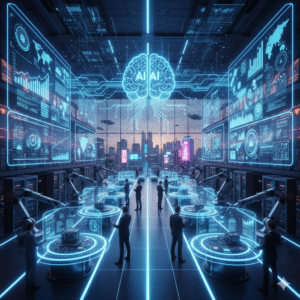
AI and automation technologies are contributing to productivity growth across multiple sectors:
-
Manufacturing: Robotics and AI-driven optimization reduce costs and increase output.
-
Finance: Algorithmic trading, fraud detection, and credit assessment improve efficiency.
-
Healthcare: AI diagnostics and patient monitoring enhance outcomes while cutting costs.
Global GDP Contribution: According to PwC 2025 estimates, AI and automation could add $4–5 trillion to global GDP by 2025, with the U.S., China, and EU leading adoption.
📊 High-CPC keywords: AI economic impact, automation productivity 2025, AI growth investment
2. Labor Market Transformations
AI and automation are redefining the workforce:
-
Job Displacement vs. Creation: Routine tasks are automated, but AI creates high-skilled roles in programming, data analysis, and AI operations.
-
Gig Economy Expansion: AI platforms enable flexible work opportunities and freelance marketplaces.
-
Reskilling Imperative: Governments and corporations invest heavily in workforce retraining.
Implications: Workers with digital and AI-related skills command higher wages, contributing to structural shifts in employment patterns.
SEO keywords: future of work 2025, AI jobs growth, workforce automation trends
3. Sectoral Analysis: Winners and Losers
Winners
-
Technology and Software: AI tools drive productivity, efficiency, and revenue growth.
-
Healthcare and Biotech: AI-assisted research accelerates drug development.
-
Logistics and Supply Chain: Automated warehouses and predictive analytics reduce costs.
Losers
-
Routine Manufacturing: Low-skill repetitive roles decline.
-
Traditional Retail: Automation and e-commerce reduce demand for in-store staff.
-
Administrative Services: Robotic process automation replaces clerical work.
Investor Insight: Strategic allocation to AI-first companies and sectors benefiting from automation maximizes returns in 2025.
4. Investment Opportunities in AI and Automation

AI presents multiple avenues for investors:
-
Equity Investments: Shares in AI platform developers and SaaS providers.
-
ETFs & Index Funds: Focused on automation, robotics, and AI-driven industries.
-
Private Equity & Startups: High growth potential in early-stage AI ventures.
-
AI-Enhanced Portfolio Management: Algorithmic trading and predictive analytics improve risk-adjusted returns.
💰 High-CPC Keywords: AI investment 2025, automation stock opportunities, tech growth ETF
5. AI and Global Competitiveness
Countries that lead AI adoption gain economic and geopolitical advantages:
-
United States: Silicon Valley and AI startups drive innovation.
-
China: Government-backed AI initiatives in surveillance, fintech, and manufacturing.
-
European Union: Regulatory frameworks balance innovation with ethical considerations.
Policy Implications: Nations investing in AI infrastructure, education, and regulation will outperform peers economically and strategically.
6. AI-Driven Productivity Growth and Inflation
Automation and AI can influence inflation indirectly:
-
Cost Reduction: Lower production costs may reduce price pressures.
-
Wage Pressure: High-skill AI roles push wages up, contributing to sectoral inflation.
-
Supply Chain Efficiency: AI reduces bottlenecks, smoothing price volatility.
Investor Insight: AI adoption mitigates inflationary risks in select sectors, offering safer investment opportunities.
7. Risks and Challenges

While AI offers growth opportunities, several risks exist:
-
Ethical Concerns: Bias in algorithms and surveillance risks.
-
Cybersecurity Threats: Increased dependence on AI increases vulnerability.
-
Economic Disparity: Automation may exacerbate inequality if reskilling is inadequate.
-
Regulatory Hurdles: Governments may impose strict AI governance that affects profitability.
8. Future Outlook: 2025 and Beyond
By 2025, AI and automation are expected to:
-
Contribute significantly to global productivity growth.
-
Drive structural labor market shifts, emphasizing skills over routine tasks.
-
Influence investment flows, particularly in technology, healthcare, and logistics.
-
Shape national competitiveness, impacting global trade and geopolitical power.
Long-Term Implications: Companies and investors that integrate AI early gain sustainable competitive advantages.
Investor Takeaway

Investor Takeaway:
AI and automation are expected to add trillions to global GDP by 2025.
Focus investments on technology, healthcare, and logistics sectors benefiting from AI.
Upskill workforce and monitor regulatory trends to manage risk.
Consider ETFs, tech equities, and AI-driven investment platforms for portfolio growth.
Long-term productivity gains from AI offer inflation mitigation and strategic advantages.